
Low Testosterone Symptoms in Men: Busting the Myths of Ageing and Vitality
What if the persistent fog of exhaustion you feel isn't an inevitable tax of ageing, but a clinical signal your body is struggling to communicate? You've likely been told that losing your competitive edge, struggling with stubborn abdominal fat, or feeling a muted sense of drive are simply the stand...

What if the persistent fog of exhaustion you feel isn't an inevitable tax of ageing, but a clinical signal your body is struggling to communicate? You've likely been told that losing your competitive edge, struggling with stubborn abdominal fat, or feeling a muted sense of drive are simply the standard milestones of midlife. It's a common narrative, yet the low testosterone symptoms men frequently endure are often mislabelled as natural decline rather than a treatable deficiency. We understand the frustration of doing everything right, from your sleep hygiene to your training, only to find the results no longer match the effort.
In this guide, we uncover the subtle indicators of hormonal decline and why the "just getting older" myth often masks a path to genuine restoration. You'll gain clarity on the physiological signs that warrant professional attention and discover a sophisticated, clinical path toward optimisation. We'll explore the intersection of science and vitality, providing a methodical overview of how modern longevity medicine can restore your mental sharpness and physical strength. It's time to move beyond the myths of ageing and reclaim a life defined by precision, energy, and poise.
Key Takeaways
• Recognise that testosterone is a complex, multi-systemic hormone that influences everything from bone density to metabolic health, far beyond the narrow scope of sexual drive.
• Identify the difference between work-related stress and the specific low testosterone symptoms men often endure, including memory lapses and a diminished sense of professional drive.
• Uncover the hormonal triggers behind anabolic resistance and why traditional training methods may fail when your metabolic markers are out of alignment.
• Understand the critical distinction between total and bio-available testosterone to ensure your clinical path is based on your unique physiological needs rather than generic averages.
• Discover a methodical path to restoration that combines clinical precision with a bespoke longevity plan at our Albion sanctuary.
Understanding Low Testosterone Symptoms in Men Beyond the Libido Myth
Testosterone is far more than a driver of sexual function; it is a fundamental bio-regulator that underpins almost every aspect of male physiology. Many men assume that if their libido remains intact, their hormones must be balanced. This is a common misconception. In reality, the low testosterone symptoms men experience often manifest in the bones, the blood, and the brain long before they ever affect the bedroom. Viewing testosterone through a narrow lens of "drive" ignores its systemic importance to your long-term health and vitality.
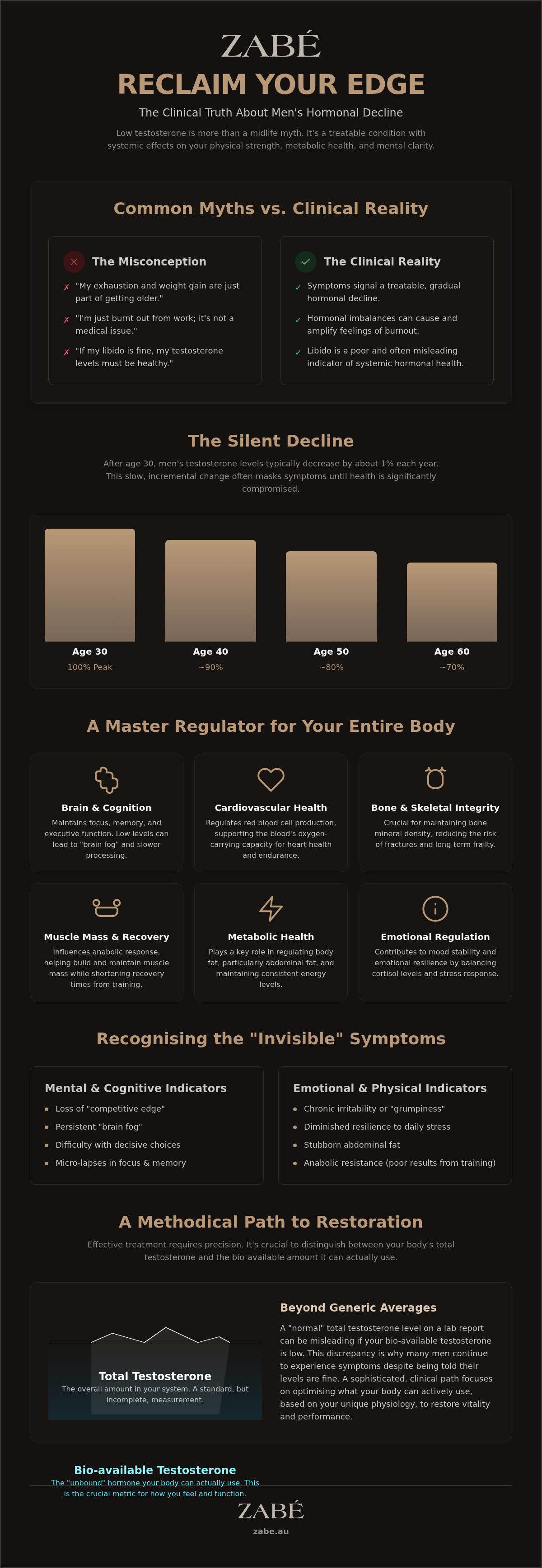
While women experience a rapid cessation of hormone production during menopause, men undergo a more subtle, incremental decline. This process, often referred to as Late-onset hypogonadism, involves a gradual reduction in testosterone levels of approximately 1% per year after the age of 30. Because this change is so slow, the body often adapts, masking the decline until systemic health is significantly compromised. This creates a critical gap between numerical deficiency, which is what a standard blood test might show, and symptomatic deficiency, which is how you actually feel and function daily.
The Systemic Role of Testosterone
Beyond muscle mass, testosterone plays a vital role in cardiovascular health by regulating red blood cell production. It ensures the blood maintains the correct oxygen-carrying capacity, supporting endurance and heart health. Similarly, it is essential for skeletal integrity. Testosterone is a master regulator of male metabolic health. Without adequate levels, bone mineral density can diminish, which increases the risk of fractures and long-term frailty. It also influences cognitive clarity, helping to maintain the neural pathways responsible for focus, memory, and executive function.
Why Libido is a Leading But Misleading Indicator
Libido is a complex interplay of biology and psychology. It's often the last indicator to falter because the body prioritises reproductive drive even as other systems begin to fail. Men frequently maintain a high sense of desire because of other neurochemicals, such as dopamine and oxytocin, which can mask an underlying clinical deficiency.
This discrepancy is why professional clinical precision is paramount. You might still feel motivated, yet find your recovery times are longer, your sleep is less restorative, or your mental focus is slipping. Differentiating between the psychological urge and the physiological capacity is a key step in identifying a true decline in low testosterone symptoms men should be aware of. We focus on the person, not just the number, ensuring your path to optimisation is as nuanced as your biology.
The Invisible Symptoms: Mental and Emotional Indicators
High-performance environments demand a level of mental agility that many men find increasingly difficult to sustain as they age. Often, this decline is misdiagnosed as professional burnout or the inevitable byproduct of a demanding career. While external stressors are certainly a factor, the underlying reality is frequently hormonal. The low testosterone symptoms men encounter in their professional lives are often invisible, manifesting as a loss of the "competitive edge" or a newfound difficulty in making swift, decisive choices that once felt like second nature. This isn't a failure of character; it's a shift in your internal chemistry.
Cognitive Decline and Brain Fog
The prefrontal cortex and the hippocampus are densely populated with androgen receptors, making the brain a primary target for testosterone. These regions are responsible for executive function, spatial memory, and complex problem-solving. When hormonal support wanes, men often report a persistent "brain fog" that slows cognitive processing. You might notice subtle micro-lapses in focus, such as forgetting the specific details of a recent brief or finding it harder to maintain concentration during long meetings. By prioritising hormonal health, you aren't just treating a deficiency; you are restoring the biological foundation of your mental sharpness.
Emotional Resilience and Mood Stability
Hormonal health is inextricably linked to emotional regulation. Low testosterone is frequently associated with an increase in cortisol, the hormone responsible for the "fight or flight" response. This imbalance can lead to a state of chronic irritability or a diminished capacity to handle daily frustrations. What many dismiss as "middle-aged grumpiness" is often a physiological manifestation of endocrine fatigue. This lack of resilience can make previously manageable tasks feel overwhelming, creating a cycle of stress that further depletes your vitality.
This emotional volatility doesn't just affect the individual; it ripples through personal and professional relationships, making the environment feel more taxing than it truly is. Differentiating between clinical depression and these low testosterone symptoms men experience is vital for effective care. Achieving a state of hormonal equilibrium can significantly improve your resilience, allowing you to navigate complex social and professional dynamics with a sense of calm professionalism. If you feel your emotional baseline has shifted, a clinical assessment of your longevity markers can provide the clarity needed to begin a journey of restoration.
Physical Markers and Metabolic Health Realities
The term "Dad Bod" has entered the modern lexicon as a relatable, almost endearing descriptor for the physical changes men face in middle age. In a clinical context, however, the accumulation of visceral abdominal fat is a significant red flag. It's often one of the most visible low testosterone symptoms men exhibit, yet it is frequently dismissed as an inevitable consequence of a slower lifestyle. This shift in body composition isn't merely about aesthetics; it is a profound indicator of metabolic dysregulation that requires a sophisticated, medical response.
Metabolic Syndrome and Abdominal Adiposity
Low testosterone levels directly impair your body's ability to manage insulin and lipid metabolism. This hormonal deficit promotes the storage of fat around the internal organs, a condition known as visceral adiposity. The challenge is compounded by the aromatase enzyme, which is found in high concentrations within fat cells. This enzyme actively converts your remaining testosterone into oestrogen. This creates a biological trap: the more abdominal fat you carry, the more your testosterone is depleted, which in turn makes it harder to lose the weight. This is why many men find that even the most disciplined diet and exercise regimes fail to yield results when their hormones are out of alignment.
Muscle Sarcopenia and Recovery Times
While the broader culture accepts muscle loss as a standard part of ageing, clinical muscle wasting, or sarcopenia, is often driven by hormonal decline. Testosterone is the primary driver of protein synthesis and the repair of muscle fibres. When levels drop, you may encounter "anabolic resistance." This is a frustrating state where your body no longer responds effectively to the stimulus of the gym. You might train with the same intensity as always, yet see your strength plateau or your muscle mass begin to soften.
Recovery becomes another casualty of this decline. Where you once bounced back from a heavy session in twenty-four hours, you may now find that muscle soreness and systemic fatigue linger for several days. This isn't just "getting older." It's a signal that your body lacks the hormonal resources to repair and rebuild. Maintaining lean muscle mass is a cornerstone of long-term longevity, as it supports metabolic health and protects skeletal integrity.
The physical signals of decline often extend to your sleep and skin. A lack of testosterone frequently disrupts the deep REM cycles essential for hormonal production, creating a vicious cycle of exhaustion and further depletion. You might also notice a loss of skin elasticity or thinning hair, which are the outward expressions of an internal system struggling to maintain its vitality. Recognising these low testosterone symptoms men face is the first step toward reclaiming a physique that reflects your inner drive and commitment to health.
Navigating the "Normal Range" and Pathology Tests
A common hurdle many men face is the reassurance that their blood work is "normal" despite feeling a profound loss of vitality. The standard reference range used by most Australian laboratories is a statistical average derived from a broad population, which often includes individuals who are already unwell or significantly older. Relying solely on this range is a reactive approach to health. It overlooks the fact that your personal baseline for peak performance may be much higher than the laboratory floor. When addressing the low testosterone symptoms men report, we must look beyond these generic brackets to find what is optimal for you.
Total testosterone only tells part of the story. It represents the entire pool of the hormone in your system, but a large portion is "locked up" by Sex Hormone Binding Globulin (SHBG). This makes it unavailable for your cells to use. Free testosterone, or bio-available testosterone, is the "cash in hand" that your body actually spends on muscle repair, cognitive function, and metabolic regulation. You might have a "normal" total level, but if your SHBG is high, you will still experience the classic low testosterone symptoms men find so debilitating. This is often why a Brisbane GP might suggest you are "fine" while your lived experience suggests otherwise.
Interpreting Your Blood Results
In Australia, testosterone is typically measured in nanomoles per litre (nmol/L). While a laboratory might flag a result as "low" only when it drops below 8 nmol/L, many men begin to feel symptomatic when they fall below 15 or even 20 nmol/L. Precision is essential. This is why morning fasted blood tests are the only accurate way to measure levels, as your hormone production peaks in the early hours and declines throughout the day. For a deeper look at these metrics, you can read our Interpreting Your Testosterone Test: A Guide to Hormonal Health Assessment.
The Importance of a Comprehensive Longevity Panel
Hormones do not act in isolation. A truly sophisticated assessment must include markers for oestradiol, prolactin, and thyroid function to rule out other causes of fatigue or weight gain. Even the Brisbane climate plays a role; high levels of sun exposure and physical activity in Queensland can influence your metabolic demands and how your body utilises these markers. Optimal is a personal metric, not a lab average. We believe in a methodical, individualised approach that prioritises how you feel over a standardised printout. If you are ready for a more nuanced perspective on your health, we invite you to book a comprehensive clinical review at our Albion clinic.
A Longevity Approach to Hormonal Health at ZABÉ
At ZABÉ, we view hormonal health as the silent architect of your overall vitality. Our Albion clinic provides a sanctuary where longevity medicine and aesthetic excellence converge, offering a sophisticated alternative to the generic clinical environments of the past. We don't merely treat the low testosterone symptoms men present with; we curate a comprehensive path toward systemic optimisation. This approach ensures that your physical strength, mental clarity, and aesthetic presence are all working in harmony to reflect your personal and professional standards.
Personalised Optimisation Protocols
Clinical precision is the cornerstone of our practice. When we design a protocol, we consider the unique nuances of your biology, lifestyle, and long-term goals. For many, this involves the methodical use of testosterone enanthate within a strictly supervised medical framework. This allows for stable, predictable levels that avoid the "rollercoaster" effect often associated with less refined treatments. We monitor your progress with meticulous care, adjusting dosages based on objective data and your subjective sense of wellbeing.
This hormonal foundation often acts as a catalyst for our other services. By balancing your internal chemistry, you create a more receptive environment for advanced dermal therapies and peptides. We often see that systemic health significantly enhances the outcomes of our aesthetic treatments, ensuring that the results feel natural and sustainable. It's about building a foundation of health that supports a life of high performance and quiet confidence.
Your Journey at Our Albion Clinic
Entering our boutique space in Albion is the first step in a methodical journey toward restoration. Your initial longevity consultation is an unhurried, thorough exploration of your health markers and personal aspirations. We look beyond the immediate low testosterone symptoms men experience to understand the broader context of your longevity. This means focusing on markers that predict long-term health, such as bone density, metabolic flexibility, and cognitive resilience.
Our philosophy is rooted in the idea that aesthetic vitality is a reflection of systemic health. For instance, while we address hormonal balance internally, we might complement this with advanced skin treatments. You can learn more about this synergy in our article, What is Rejuran? A Clinical Guide to Skin Longevity in Brisbane. At ZABÉ, you are not just a patient; you are a partner in a journey toward a more refined and vital version of yourself. We provide the expertise and discretion required to ensure your path to optimisation is as seamless as it is effective.
Reclaiming Your Vitality through Clinical Precision
Vitality is not a static trait that inevitably fades with time; it is a biological state maintained by a complex hormonal equilibrium. By recognising that the low testosterone symptoms men experience are often indicators of systemic decline rather than simple signs of "getting older", you can begin the journey of restoration. We have explored how these shifts impact your cognitive clarity, metabolic health, and emotional resilience. Moving beyond the constraints of standard laboratory averages allows for a more nuanced and personal definition of health.
At ZABÉ, we specialise in bridging the gap between clinical rigor and aesthetic vitality. Our boutique Albion sanctuary offers a discreet environment where your unique physiology is the priority. Through expert hormonal optimisation and integrated longevity medicine, we help you restore the mental sharpness and physical drive that define your best self. It's time to stop accepting decline and start prioritising your long-term wellbeing. We invite you to Book a Longevity Consultation at ZABÉ Cosmetic to explore your personalised path to peak performance. Your most vital years are still ahead of you.
Frequently Asked Questions
Is low testosterone a normal part of ageing for Australian men?
While a gradual decline of about 1% per year is common after age 30, symptomatic deficiency is not an inevitable requirement of ageing. Many Australian men accept fatigue and muscle loss as "normal" when they are actually treatable hormonal shifts. Distinguishing between chronological age and biological health is essential for longevity. We focus on maintaining optimal levels to ensure your quality of life remains high, rather than simply accepting a standard decline as a fact of life.
Can I have low testosterone symptoms even if my libido is normal?
Yes, you can certainly experience low testosterone symptoms men often overlook even with a healthy libido. Sexual drive is frequently the last indicator to falter because the body prioritises reproductive signals. You may notice cognitive fog, increased abdominal fat, or diminished physical recovery long before sexual function is impacted. This discrepancy is why a comprehensive clinical assessment is more reliable than self-diagnosis based on a single metric like desire.
How do I know if my fatigue is from stress or low testosterone?
Stress-related fatigue often resolves with rest, whereas hormonal exhaustion persists regardless of your sleep quality. Low testosterone typically presents with a specific loss of "drive" and morning lethargy that doesn't lift after a holiday or a weekend off. If your fatigue is accompanied by physical changes like muscle softening or increased irritability, it's likely a hormonal issue. A precise blood panel is the only way to differentiate between professional burnout and endocrine depletion.
What is the "normal range" for testosterone in Australia?
Standard Australian laboratory ranges typically fall between 8 and 27 nmol/L, but these figures represent a broad population average rather than an individual optimum. Many men feel significantly symptomatic even when their results are technically within this "normal" bracket. We prioritise your clinical symptoms and personal baseline over generic lab markers. True optimisation involves finding the specific level where you feel most vital, sharp, and physically capable, regardless of the statistical mean.
What are the risks of ignoring low testosterone symptoms?
Untreated hormonal decline can lead to long-term systemic issues, including reduced bone mineral density and an increased risk of cardiovascular complications. Beyond the physical, ignoring these signals often results in persistent mental health challenges, such as chronic irritability or a loss of professional confidence. Over time, the metabolic shifts associated with low testosterone can contribute to insulin resistance and the accumulation of dangerous visceral fat, making early clinical intervention essential for long-term health and vitality.
How long does it take to see results from testosterone optimisation?
Most men report improved mental clarity and mood stability within the first three to four weeks of beginning a protocol. Physical changes, such as increased lean muscle mass and the reduction of abdominal fat, typically become more apparent between the three and six-month marks. It is a methodical process rather than an overnight transformation. We monitor your markers closely during this period to ensure your transition to optimal health is smooth, steady, and sustainable.
Do I need a referral to visit a longevity clinic in Brisbane for TRT?
No, you don't require a GP referral to begin your journey at our Albion clinic. We provide a comprehensive, end-to-end medical service that includes your initial longevity consultation, pathology requests, and the ongoing management of your optimisation protocol. This direct path ensures a high level of discretion and personalised care. Our focus is on providing a sophisticated, boutique experience that prioritises your comfort and individual health goals from the very first appointment.
Can lifestyle changes like diet and exercise fix low testosterone?
While quality sleep, strength training, and a nutrient-dense diet are foundational for health, they cannot always override a clinical deficiency. In cases of significant hormonal decline, lifestyle interventions may offer only marginal improvements. If your body has lost the capacity for adequate production, medical optimisation is often necessary to restore a baseline that makes your healthy habits effective again. We view clinical treatment and lifestyle excellence as complementary partners in your long-term wellness strategy.