
Nourish Your Results: How Nutrition Helps Your Botox Last Longer
What you eat before and after your Botox appointment can genuinely affect how smooth and long-lasting your results are. Here's the nutrition science behind zinc, antioxidants, protein and hydration — and a simple checklist to follow.
At ZABÈ, we know that great results don't end when you walk out of the treatment room. What you put on your plate in the weeks before and after your appointment can genuinely influence how smooth, soft and long-lasting your Botox results are. Here's what the science says — and how to eat for results that go the distance.
Why Nutrition Matters After Botox
Botox (botulinum toxin) works by temporarily blocking nerve signals to targeted muscles, softening the fine lines and wrinkles caused by repeated movement. But your body isn't a static canvas — it's constantly processing nutrients, repairing tissue and metabolising what you consume. Certain nutrients can support the way botulinum toxin binds and functions at a cellular level, while others support the skin quality that makes your results look their best.
The Zinc Connection
If there's one nutrient worth talking about, it's zinc. Botulinum toxin is part of a family of enzymes called zinc metalloproteinases — meaning it actually requires zinc as a cofactor to do its job of blocking nerve signal transmission. If your zinc levels are low, the toxin may not bind or function as efficiently, which can shorten how long your results last.
A small but often-cited clinical trial found that patients who supplemented with zinc (paired with phytase, an enzyme that helps the body absorb zinc from plant sources) in the days surrounding their treatment saw their results last around 30% longer on average.
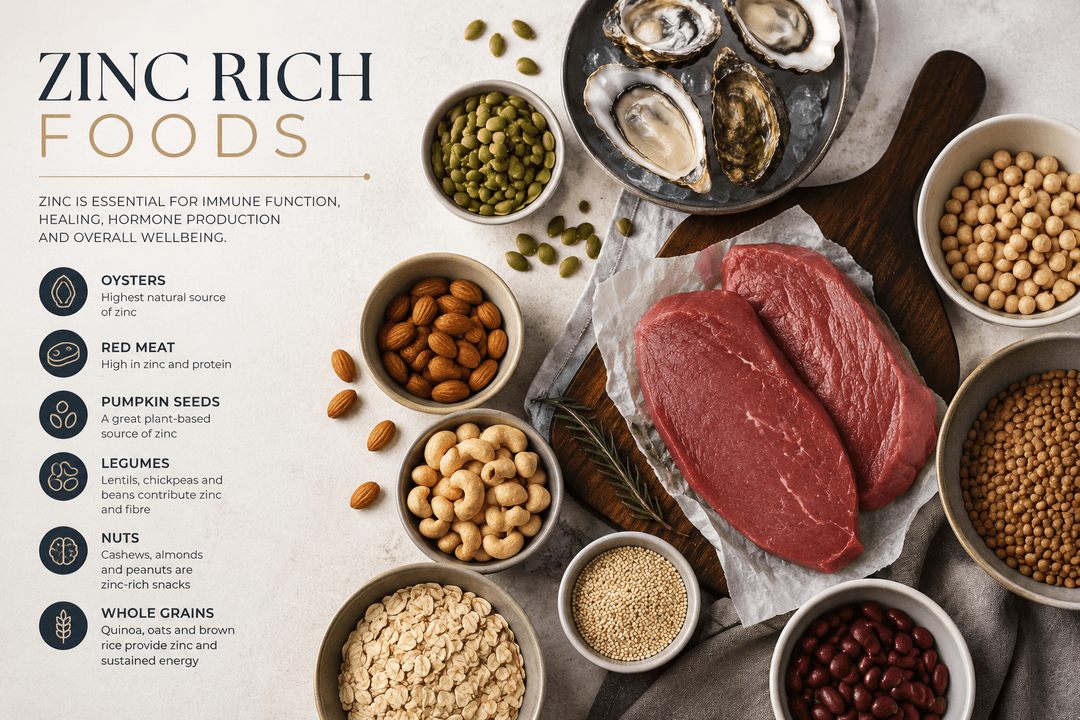
Zinc-rich foods to build into your week:
- Oysters, crab and other shellfish (among the richest natural sources)
- Pumpkin seeds, sunflower seeds and cashews
- Lean red meat and poultry
- Chickpeas, lentils and legumes
- Eggs and dairy
If you're considering a short-term zinc supplement around your appointment, chat with your treating nurse first — excess zinc can cause nausea and, over time, interfere with copper and iron absorption. This is a "more isn't better" nutrient.
Antioxidants: Protecting Skin Quality From the Inside
While zinc supports the toxin itself, antioxidants support the environment your results are showing up in. Oxidative stress accelerates the breakdown of collagen and elastin, which can make fine lines more noticeable even while your Botox is still active. Brightly coloured produce — berries, leafy greens, capsicum, citrus — is rich in vitamin C and polyphenols that help neutralise this everyday cellular damage and support a clearer, more even complexion.
Aim for:
- A palm-sized serve of berries most days
- Leafy greens (spinach, kale, rocket) at least once daily
- Vitamin C sources like citrus, kiwifruit and capsicum, which also play a role in collagen synthesis
Protein for Skin Structure
Collagen and elastin — the proteins that keep skin firm and resilient — are built from amino acids you get through diet. Adequate protein intake supports the skin's underlying structure, which complements the smoothing effect of your treatment rather than working against it. Lean meats, fish, eggs, legumes and dairy are all solid sources.
Hydration: The Simple One People Skip
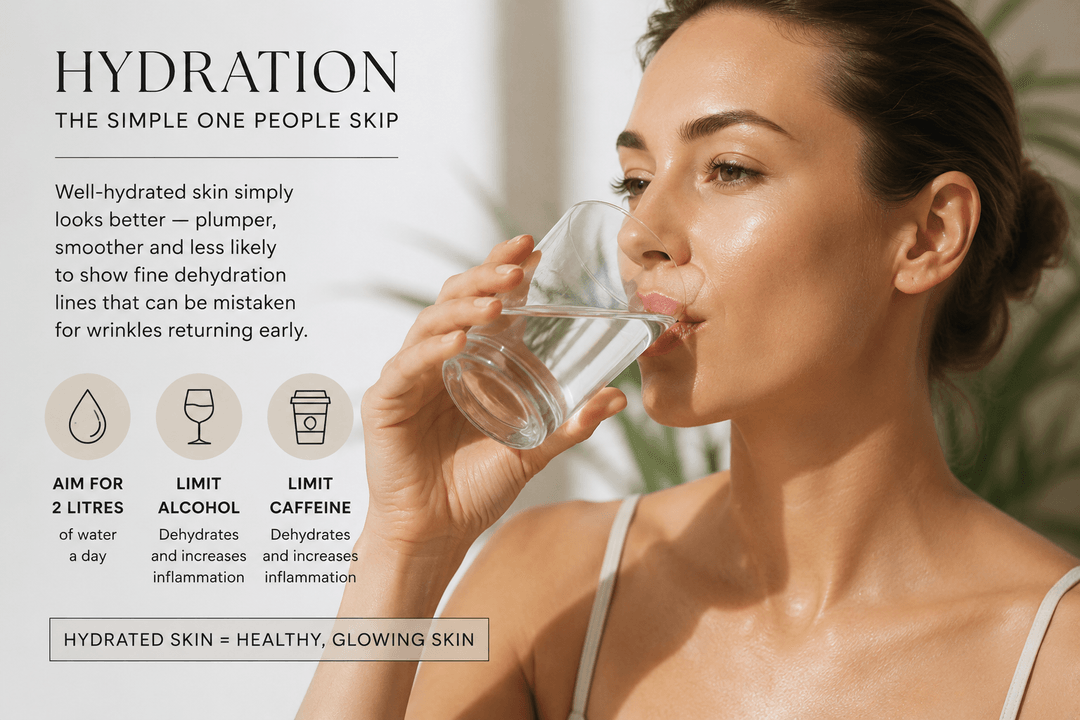
Well-hydrated skin simply looks better — plumper, smoother and less likely to show fine dehydration lines that can be mistaken for wrinkles returning early. Aim for around 2 litres of water a day, and be mindful that alcohol and excess caffeine are both dehydrating and can also promote inflammation, which works against your results.
What to Limit Around Your Appointment
- Alcohol – dehydrating and mildly blood-thinning, which can increase bruising risk at injection sites
- High-sodium, processed foods – can contribute to fluid retention and puffiness that masks results
- Excess sugar – contributes to glycation, a process that stiffens and weakens collagen over time
A Simple Nutrition Checklist for Better, Longer-Lasting Botox
- Include a zinc-rich food at most meals in the days around your treatment
- Eat the rainbow — aim for at least 3 different coloured fruits or vegetables daily
- Prioritise a palm-sized protein portion with each meal
- Drink water consistently through the day, not just when thirsty
- Limit alcohol for 24–48 hours before and after treatment
- Go easy on processed, high-sodium foods in the lead-up to your appointment
The Takeaway
Botox and great nutrition work as a team. The treatment does the heavy lifting, but a diet rich in zinc, antioxidants, protein and water helps your body make the most of it — supporting both how long your results last and how healthy your skin looks while you're enjoying them.
Have questions about how to prepare for your next treatment? Our team at ZABÈ is always happy to talk through a plan tailored to you.
This article is general information and isn't a substitute for personalised medical advice. Speak with your treating clinician before starting any new supplement.